By Driss Effina
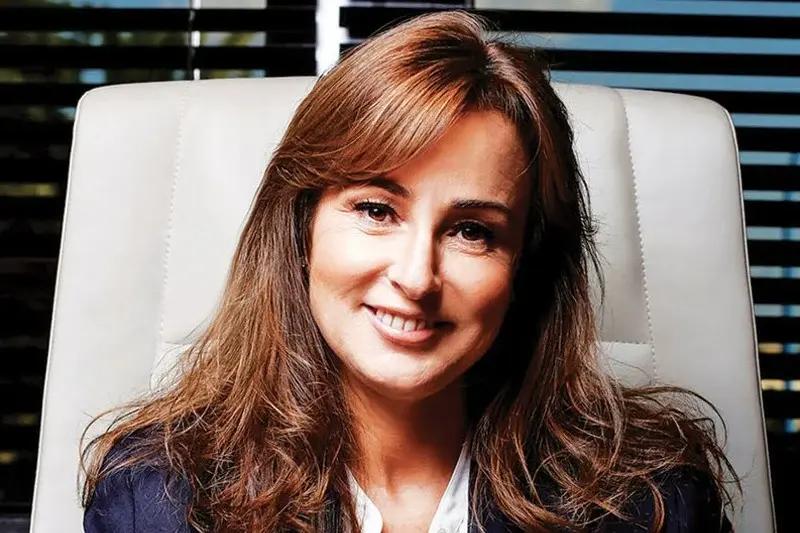
Morocco has just marked a decisive moment in African finance. With the appointment of Noufissa Kessar as Chief Executive Officer and President of Al Mada Group, the kingdom signals both institutional continuity and strategic renewal at the very core of its economic influence across the continent.
Announced on January 15, 2026, this appointment follows the sudden passing of Hassan Ouriagli, the architect who transformed the former SNI into a pan-African investment powerhouse. Kessar thus becomes the first woman to lead Al Mada since its creation an historic milestone in a sector still largely shaped by entrenched hierarchies.
At 59, she brings more than two decades of high-level experience in finance, investment strategy, and corporate governance. But beyond symbolism, her elevation reflects a deeper strategic choice: privileging rigor, capital discipline, and long-term African value creation at a time when global investment cycles are becoming increasingly volatile.
From Lausanne to Casablanca: An Engineer’s Strategic Ascent
Noufissa Kessar’s trajectory is anything but conventional. Trained as an engineer at École Polytechnique Fédérale de Lausanne, she developed early on a methodical and systems-oriented mindset one that would later distinguish her leadership style in finance. Her professional career began in Switzerland within the Nestlé Group, where she gained exposure to global operational standards and complex corporate structures.
Her return to Morocco in the mid-2000s coincided with a decisive phase in the modernization of the country’s financial system. In 2008, she joined Attijariwafa Bank, the kingdom’s largest banking institution and a central pillar of Al Mada’s portfolio. Her rise within the group was swift and substantive. Between 2008 and 2012, she headed the Private Banking Division, overseeing high-net-worth clients and structuring sophisticated wealth management solutions at a moment when Moroccan capital was becoming increasingly regionalized.
She later played a central role in building and structuring Attijari Wealth Management, contributing to the professionalization of asset management and private banking services, while reinforcing governance standards and risk frameworks. This blend of technical expertise, financial judgment, and institutional discipline would ultimately define her reputation within Morocco’s corporate ecosystem.
A Strategic Choice for Al Mada and for Africa
Kessar’s appointment should be read less as a break and more as a strategic consolidation. Al Mada today operates across 27 African countries, with significant positions in banking, insurance, telecommunications, mining, energy, and agri-business. The challenge ahead is not expansion for its own sake, but selective capital allocation, resilience to global shocks, and alignment with Africa’s long-term structural transformation.
In this sense, her engineering background is not anecdotal. It signals a leadership style grounded in data, scenario analysis, and disciplined execution qualities increasingly essential as African investment funds navigate tighter global liquidity, climate constraints, and shifting geopolitical alignments.
Her elevation also carries a broader message: African capital can and must be led by profiles that combine international standards with deep regional understanding. Morocco, through Al Mada, continues to position itself not merely as a national investor, but as a continental platform for patient, strategic capital.
Beyond Symbolism
While her appointment is rightly celebrated as a breakthrough for women in African corporate leadership, reducing it to gender alone would miss the point. Noufissa Kessar’s rise is прежде всего a recognition of competence, continuity, and strategic clarity.
At a moment when Africa’s development increasingly depends on the quality not just the quantity of investment, Al Mada’s choice sends a clear signal: leadership matters, governance matters, and long-term vision matters.
Morocco has placed one of its most seasoned financial strategists at the helm of its most powerful private investment vehicle. The implications will extend far beyond Casablanca.